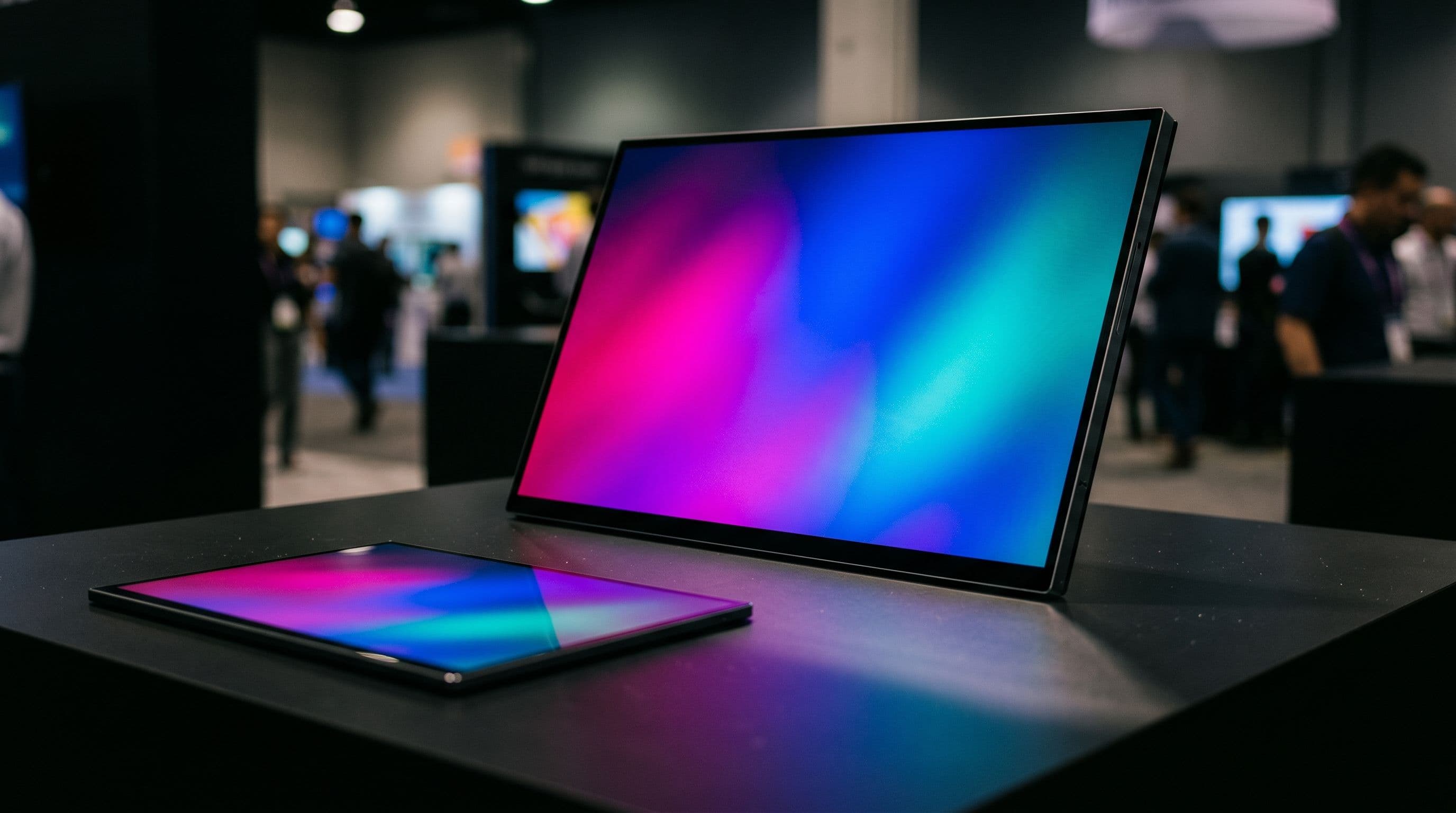
LG Display's third-generation Tandem OLED arrived at SID Display Week in Los Angeles this week with three numbers worth remembering: 1,200 nits of brightness, 18% lower power consumption, and a lifespan past 15,000 hours. The first version targets car displays. Laptops and tablets are next.
That last point matters more than the spec sheet suggests. LCD still owns most of the IT panel market: the screen on your laptop, the tablet you read on, the touch panels in your car. If LG Display can mass-produce Tandem OLED at the brightness, lifespan and power levels it claims, OLED stops being a TV-only luxury and becomes a real option for everyday devices.
What's new in the third generation
LG Display's Tandem OLED stacks two emissive layers in one panel. Splitting the workload halves the strain on each layer, which is how the panels run brighter for longer at lower current.
The third generation sharpens that. According to LG Display, the gen-3 panel uses "a newly developed OLED element that optimizes hole and electron movement to minimize degradation while ensuring uniform picture quality, along with the application of a deep blue dopant to further improve color purity, color reproduction, brightness, low power consumption, and longevity."
One clarification, since the phrase "deep blue dopant" set off speculation: LG Display confirmed to FlatpanelsHD that this is not blue PHOLED. The phosphorescent blue that would push OLED efficiency another step forward is still in development at Universal Display Corp. and Samsung Display, and it isn't what's powering this panel.
The headline numbers in plain terms:
- 1,200 nits full-screen brightness (not peak)
- 15,000+ hours of stable performance at room temperature
- 18% lower power consumption versus the second generation
- More than 2× the previous generation's lifespan
Mass production starts this year on an automotive panel. After that come IT panels: laptops, tablets, monitors.
Why automotive comes first
Cars are a punishing environment for displays. Cabin temperatures swing from -30°C in a Norwegian winter to 85°C in a parked car in Phoenix. Building automotive-grade Tandem OLED first is a useful proof point: if the panel survives a dashboard, it'll handle a laptop lid.
The timing lines up with where OLED is winning on the road. Cadillac, Mercedes-Benz, BMW, Porsche and Lotus all use LG Display OLEDs in current or upcoming models. The third-gen panel gives those automakers brighter dashboards that pull less from the 12V system.
OLED for humanoid robots
The other curveball announcement: LG Display's first OLED panel for "physical AI", aimed squarely at humanoid robots. The spec sheet reads like an automotive part. Operating range from -30°C to 85°C, up to 1,000 nits brightness. Robots have similar problems to cars: they get hot, and they live outside climate-controlled rooms.
Whether you find a robot face on an OLED panel charming or unsettling probably says more about you than about the panel. Either way, this is a real product category now.
The monitor and TV panels you'll actually buy
LG Display also brought back a string of panels first shown at CES 2026. These are the ones likely to land in monitors and TVs you can buy this year and next:
- 27-inch QHD OLED at 540Hz, with a 720Hz dual mode at lower resolution. Already shipping in the LG UltraGear 27GX790B.
- 27-inch 5K OLED with RGB-stripe subpixels at roughly 220 PPI. The stripe layout improves aperture ratio and reduces the colour fringing that has bothered text-heavy users on WOLED and QD-OLED panels. Expected in monitors later this year.
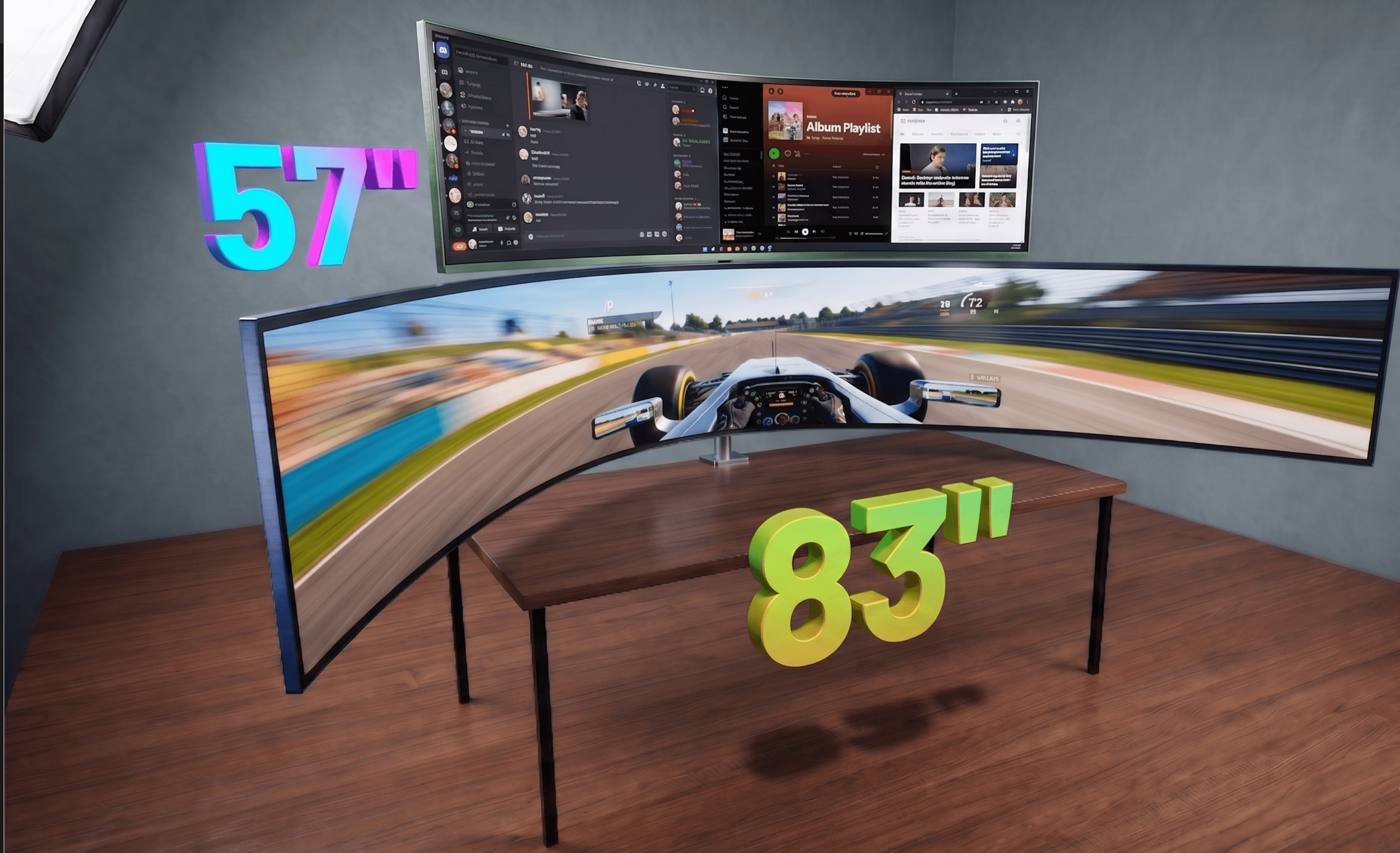
- 39-inch 5K2K OLED in a 21:9 ultrawide aspect. Likely to anchor next year's flagship ultrawide gaming and creator monitors.
- 4,500-nit Tandem WOLED for TVs, the panel already powering the 2026 LG G6.
- 83-inch Tandem WOLED for the largest premium sets.
If you've been waiting on a high-refresh OLED monitor with proper RGB subpixels, that wait is nearly over.
What this means for buyers
A few practical takeaways:
- Laptop and tablet OLEDs are about to get noticeably better. Brighter, longer-lived, more power-efficient. If you're upgrading next year, that's worth waiting for.
- Monitor text rendering is finally getting fixed. RGB-stripe OLED at 5K means clearer fonts without the chroma fringe that has plagued text on QD-OLED and WOLED.
- OLED in cars is no longer a novelty. The lifespan and brightness numbers are now competitive with the automotive TFT-LCDs that dominated for 20 years.
Blue PHOLED still isn't here. What LG Display brought to Los Angeles is the kind of incremental gain that, over two or three more iterations, ends up being the bigger story.
The SID Display Week 2026 exhibition runs at the Los Angeles Convention Center through 7 May 2026.