The 6K Odyssey G8 G80HS arrives
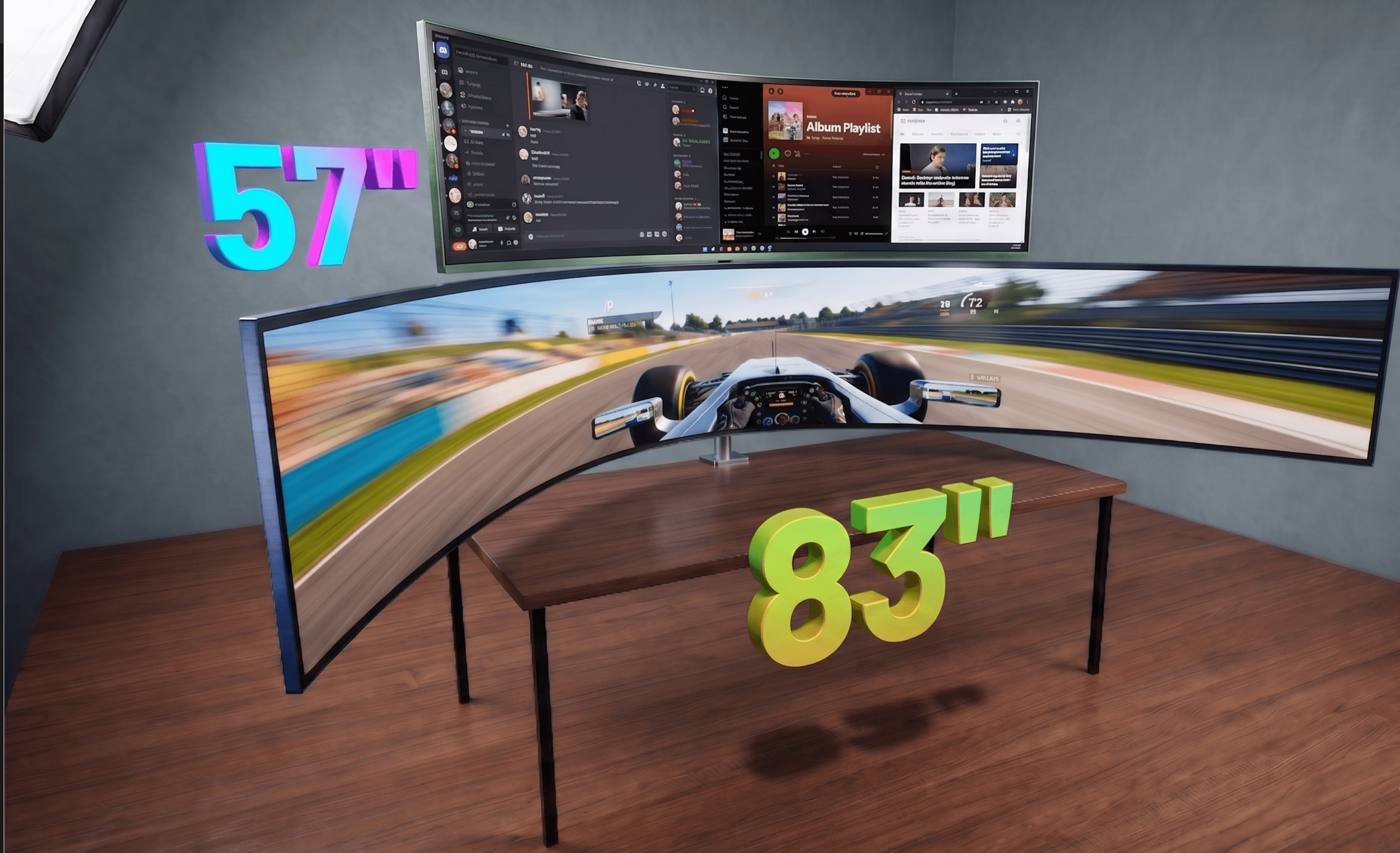
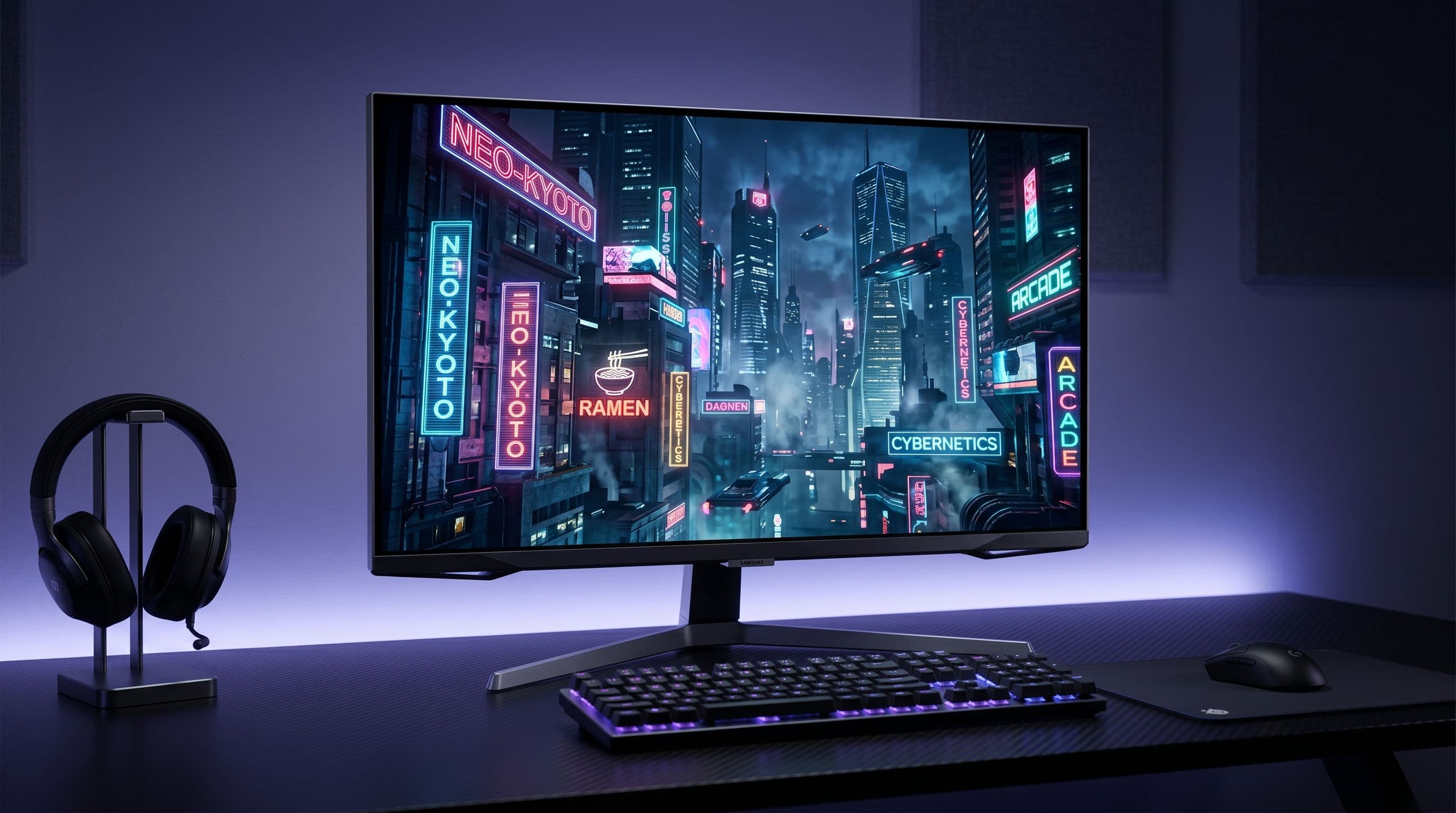
Samsung has announced its 2026 Odyssey gaming and ViewFinity productivity monitor lineups, and the headline is one for the spec-sheet history books: the new Odyssey G8 G80HS is the world's first 6K gaming monitor. It is a 32-inch IPS panel running 6,144 by 3,456 pixels at 165 Hz, with a Dual Mode that drops the resolution to 3K (3,072 by 1,728) and lifts the refresh rate to 330 Hz. The launch covers seven products in total, including a new QD-OLED with Samsung Display's Penta Tandem stack and a ViewFinity model that is one of the first monitors shipping with Thunderbolt 5.
At 224 pixels per inch on a 32-inch panel, the G80HS sits in territory that has been the exclusive domain of productivity displays until now. Samsung claims a 1 ms grey-to-grey response time, HDR10+ Gaming certification, and 400 nits peak brightness. DisplayPort 2.1 is on board, which the panel needs to feed 6K at 165 Hz without compression. Pricing in the United States is $1,600.
The interesting design choice is in the Dual Mode. Most dual-mode panels drop to 1080p for the fast refresh rate, which means competitive players are stuck with a noticeably softer image. The G80HS keeps things at 3K — still sharper than a typical 1440p esports monitor — while pushing 330 Hz. Whether the panel can sustain those speeds without visible smearing will be the question reviewers answer over the coming months, but on paper this is the most flexible big-screen gaming monitor Samsung has ever shipped.
There is also a smaller sibling, the Odyssey G8 G80HF: a 27-inch 5K IPS at 180 Hz native, with Dual Mode 360 Hz at QHD. Both models pair G-Sync compatibility with FreeSync Premium (Premium Pro on the G80HS).
Odyssey OLED G8 gets Penta Tandem
The other technically meaningful update is to the Odyssey OLED G8 G80SH, which now uses Samsung Display's new QD-OLED Penta Tandem stack. Tandem OLEDs stack multiple emissive layers to deliver more brightness for less current — the same broad approach LG Display has used on its third-generation WOLED panels. Samsung claims 1,000 nits peak and DisplayHDR True Black 500 on the 32-inch variant, a step up from the True Black 400 rating that has defined QD-OLED gaming monitors so far.
The OLED G8 ships at 240 Hz in both 27-inch and 32-inch sizes (4K, 3840 by 2160). USB-C delivers 98 W of power, and the screens carry Samsung's Glare-Free coating — the same low-reflection finish first seen on The Frame and S95D OLED TVs. For anyone whose office is not a dimly lit cave, that detail matters: the single biggest historical complaint about gaming OLEDs has been reflections, and a matte-without-haze coating on a 1,000-nit panel is a meaningful quality-of-life improvement. US pricing is $1,100 for the 27-inch and $1,300 for the 32-inch.
A new Odyssey OLED G7 G73SH also joins the family: a 32-inch 4K OLED at 165 Hz with its own Dual Mode that drops to FHD at 330 Hz, hitting 1,300 nits peak and a 0.03 ms response.
ViewFinity gets Thunderbolt 5
On the productivity side, the ViewFinity S8 S85TH is a quiet but important upgrade: a 40-inch curved 5K2K VA panel at 144 Hz with Thunderbolt 5 (80 Gbps, 140 W power delivery). Thunderbolt 5 puts the S85TH ahead of the Apple Studio Display on raw bandwidth, and matches the Dell U4025QW on charging power while offering more refresh rate. A KVM switch and TÜV Intelligent Eye Care certification round out the package.
The flat-panel ViewFinity S8 S80HF keeps things simple: a 27-inch 5K display at 60 Hz aimed at users who want pixel density without gaming features.
The Movingstyle Essential
Samsung is also widening its lifestyle monitor range with The Movingstyle Essential, a 43-inch 4K display on a movable stand that supports height, pivot, swivel, and tilt adjustment. It ships with the Tizen Smart TV apps suite and is positioned as a flexible second screen for working, watching, and casual gaming. It is a Samsung.com exclusive in the United States at $899.
Why this lineup matters
Two patterns are worth pulling out. The first is that Samsung is using Tizen on monitors more aggressively. Every model in this lineup ships with the gaming dashboard (frame-rate overlay, black equalizer, response-time tuning), the smart-TV app library, and a 7-year Tizen OS update commitment — the longest software-support window on any monitor lineup to date. The monitor is increasingly being treated as a small smart TV that happens to have a stand.
The second pattern is panel reuse. The 32-inch 6K G80HS is, on its face, a creator-grade IPS panel with a refresh-rate boost bolted on. Dual Mode then turns the same hardware into an esports display. This is the cleanest version yet of the strategy Samsung has been telegraphing since the original 32-inch 4K Odyssey OLED: one panel, two audiences, one bill of materials. It is also the reason 6K gaming has shown up before any current GPU can fully exploit it. The technical achievement is real; the market case sits as much in the prosumer overlap as it does in pure performance.
"With our 2026 lineup, we are delivering our most advanced display technologies yet while expanding access, enabling more users to experience Samsung's innovations across gaming and professional environments." — Hun Lee, Executive Vice President, Visual Display Business, Samsung Electronics
Pricing and availability
US pricing has been confirmed for the headline models: $1,600 for the Odyssey G8 G80HS, $1,100 and $1,300 for the 27-inch and 32-inch Odyssey OLED G8, and $899 for the Movingstyle Essential. Samsung is offering a $50 sign-up discount on Samsung.com across the range. Regional release timing varies; Malaysian pricing has been published (RM6,299, RM3,799, and RM5,499 across the new Odyssey and ViewFinity flagships), with broader European and Asian availability tracking the US release through the rest of 2026.
Bottom line
The Odyssey G8 G80HS will get the headlines, but the most useful product in this lineup is probably the Odyssey OLED G8: brighter QD-OLED, glare-free finish, two sizes, no Dual Mode trickery required. The G80HS is the announcement that signals where the category is going; the OLED G8 is the one most people should actually buy.